Here are some pictures of TADS being used to create and play games
on various platforms. TADS lets you write and play IF on many
platforms; we have examples here from Windows, DOS, Macintosh,
Linux, and Amiga. Note that a game that runs on one platform
will work unchanged on all of the others, because the
TADS "virtual machine" engine is the same on all platforms.
As you'll see below, numerous people have created versions of TADS
for different systems, so this gallery also serves as a credits list
and who's who of TADS development.
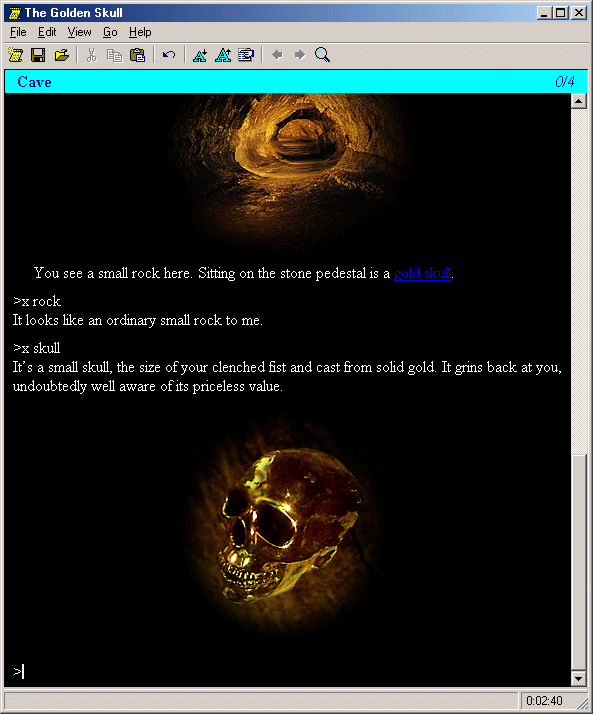
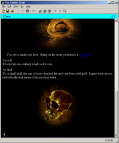 HTML TADS for Windows, running The Golden Skull, Neil K.
Guy's sample game for HTML TADS. The Golden Skull demonstrates
some of the multimedia features of HTML TADS, including graphics,
digitized sound, hyperlink commands, and text coloring.
HTML TADS for Windows, running The Golden Skull, Neil K.
Guy's sample game for HTML TADS. The Golden Skull demonstrates
some of the multimedia features of HTML TADS, including graphics,
digitized sound, hyperlink commands, and text coloring.
|
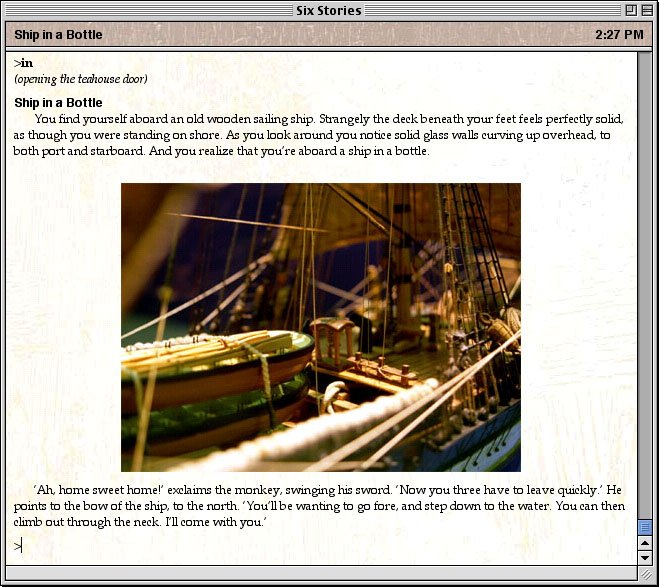
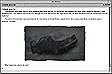 HyperTADS for Macintosh,
running Neil K. Guy's Six Stories. HyperTADS is the Mac OS 9
version of HTML TADS (for OS X, see
CocoaTADS or
QTads).
HyperTADS for Macintosh,
running Neil K. Guy's Six Stories. HyperTADS is the Mac OS 9
version of HTML TADS (for OS X, see
CocoaTADS or
QTads).
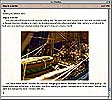 These screenshots are from
Neil K. Guy's award-winning 1999 Annual IF Competition Entry
Six Stories, which shows off the multimedia features
of HyperTADS.
In addition to HyperTADS, the full suite of TADS
tools, including the compiler and debugger, are available on
the Macintosh, as well as a text-only version of the interpreter.
Thanks to Neil K. Guy for these screenshots.
These screenshots are from
Neil K. Guy's award-winning 1999 Annual IF Competition Entry
Six Stories, which shows off the multimedia features
of HyperTADS.
In addition to HyperTADS, the full suite of TADS
tools, including the compiler and debugger, are available on
the Macintosh, as well as a text-only version of the interpreter.
Thanks to Neil K. Guy for these screenshots.
|
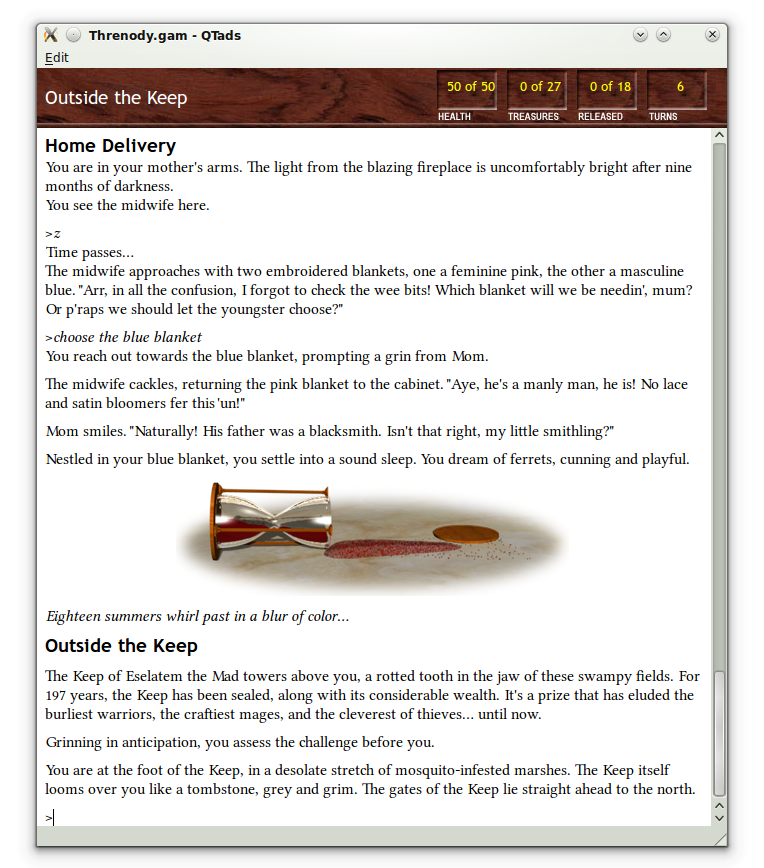
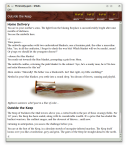 QTads for Linux,
running Threnody, by John "Doppler" Shiff;
and for Mac OS X, running Stephen Granade's Arrival.
QTads for Linux,
running Threnody, by John "Doppler" Shiff;
and for Mac OS X, running Stephen Granade's Arrival.
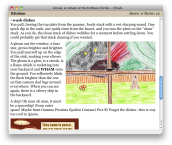 QTads is Nikos Chantziaras's Multimedia TADS interpreter for Unix, and
plays TADS 2 and TADS 3 games. It supports the full Multimedia
feature set - graphics, audio, HTML text formatting. QTads is
available on many Linux/Unix systems; it runs anywhere there's a Qt
library, including Mac OS X. Thanks to Nikos Chantziaras for the
screenshots.
QTads is Nikos Chantziaras's Multimedia TADS interpreter for Unix, and
plays TADS 2 and TADS 3 games. It supports the full Multimedia
feature set - graphics, audio, HTML text formatting. QTads is
available on many Linux/Unix systems; it runs anywhere there's a Qt
library, including Mac OS X. Thanks to Nikos Chantziaras for the
screenshots.
|
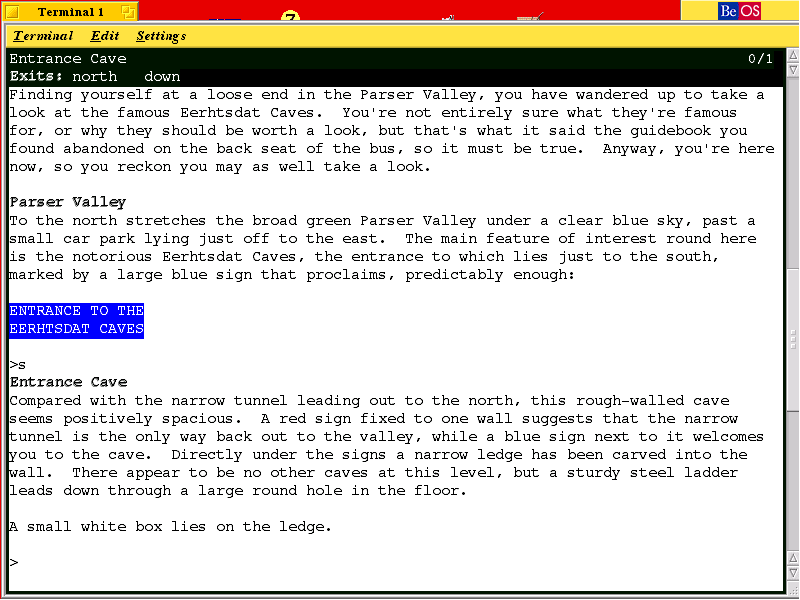
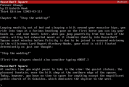 FrobTADS, running Iain Merrick's
Forever Always on Linux, and Eric Eve's The Quest of the
Golden Banana on BeOS.
FrobTADS, running Iain Merrick's
Forever Always on Linux, and Eric Eve's The Quest of the
Golden Banana on BeOS.
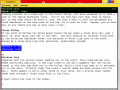 FrobTADS is Nikos Chantziaras's 2005 rewrite of the Unix
character-mode interpreter, featuring more features, greater
portability, and an easier install than the old TADS for Unix. It can
run TADS 2 and TADS 3 games. Thanks to Nikos for the Linux image,
and Sophie Fruehling for the BeOS screenshot.
FrobTADS is Nikos Chantziaras's 2005 rewrite of the Unix
character-mode interpreter, featuring more features, greater
portability, and an easier install than the old TADS for Unix. It can
run TADS 2 and TADS 3 games. Thanks to Nikos for the Linux image,
and Sophie Fruehling for the BeOS screenshot.
|
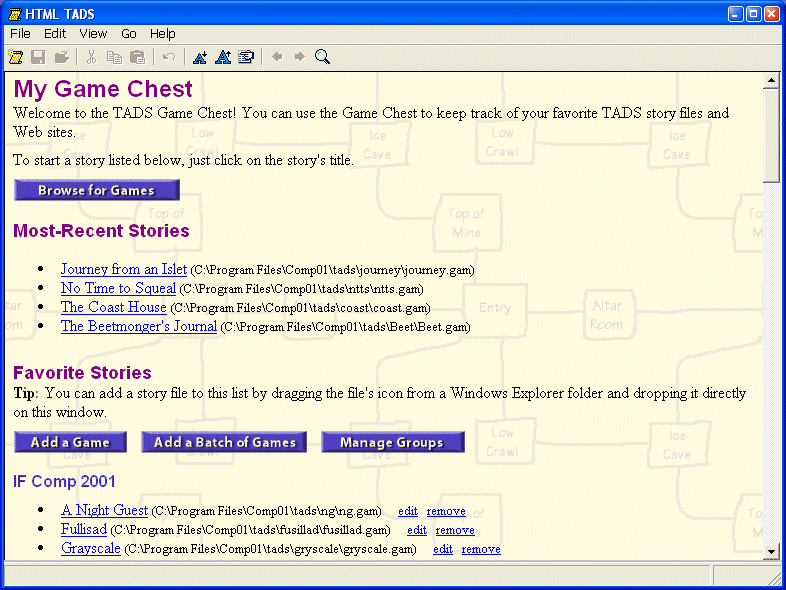
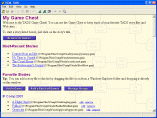 HTML TADS for Windows, showing the Game Chest, which
is a convenient way of organizing your TADS games. Game Chest
HTML TADS for Windows, showing the Game Chest, which
is a convenient way of organizing your TADS games. Game Chest
 lets you add links to your favorite games, giving each game
a full name and description so that you don't have to remember
filenames or directories. When you want to start a game, just
click on the name - no need to hunt through your hard disk for
the file.
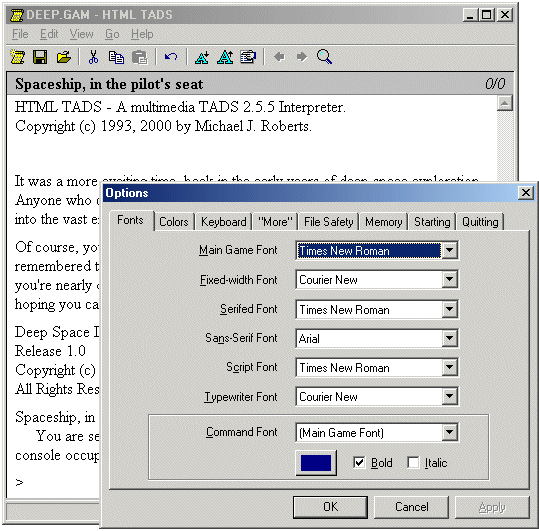
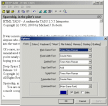
HTML TADS is highly customizable, with many settings that let you
adjust its appearance to suit your taste. The Options dialog (at right)
shows some of the visual settings you can customize.
lets you add links to your favorite games, giving each game
a full name and description so that you don't have to remember
filenames or directories. When you want to start a game, just
click on the name - no need to hunt through your hard disk for
the file.
HTML TADS is highly customizable, with many settings that let you
adjust its appearance to suit your taste. The Options dialog (at right)
shows some of the visual settings you can customize.
|
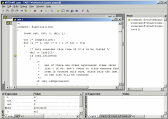 TADS Workbench for Windows. Workbench is an integrated
development environment in which you compile and debug your game.
Workbench also has a game creation "wizard," which lets you create
the skeleton of a new game project with a few mouse clicks. The
Workbench debugger has the features you'd expect from a professional
source debugger - it lets you set breakpoints, step through your
source code line by line, examine variables and expressions, store
new values in variables, stop when a given expression has a given
value, and more. Workbench is integrated with HTML TADS, so you can
use it to debug both traditional text-only games and games that take
full advantage of HTML TADS's multimedia features.
TADS Workbench for Windows. Workbench is an integrated
development environment in which you compile and debug your game.
Workbench also has a game creation "wizard," which lets you create
the skeleton of a new game project with a few mouse clicks. The
Workbench debugger has the features you'd expect from a professional
source debugger - it lets you set breakpoints, step through your
source code line by line, examine variables and expressions, store
new values in variables, stop when a given expression has a given
value, and more. Workbench is integrated with HTML TADS, so you can
use it to debug both traditional text-only games and games that take
full advantage of HTML TADS's multimedia features.
|
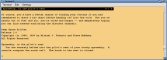 TADS for BeOS, running Deep Space Drifter. This
screen shows BeOS with its Amiga "decor" in BeOS R5. Thanks
to Big Boy Toddy for the screenshot.
TADS for BeOS, running Deep Space Drifter. This
screen shows BeOS with its Amiga "decor" in BeOS R5. Thanks
to Big Boy Toddy for the screenshot.
|
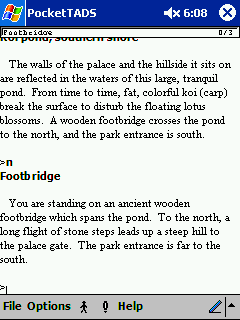
 PocketTADS,
running Katana by Matt Rohde. PocketTADS, by David Batterham,
brings TADS to hand-helds running PocketPC (also known as Windows CE)
and PocketPC 2002. Thanks to David Batterham for the screen image.
PocketTADS,
running Katana by Matt Rohde. PocketTADS, by David Batterham,
brings TADS to hand-helds running PocketPC (also known as Windows CE)
and PocketPC 2002. Thanks to David Batterham for the screen image.
|
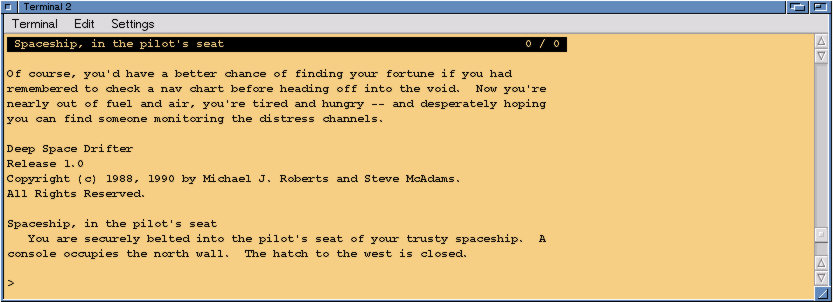
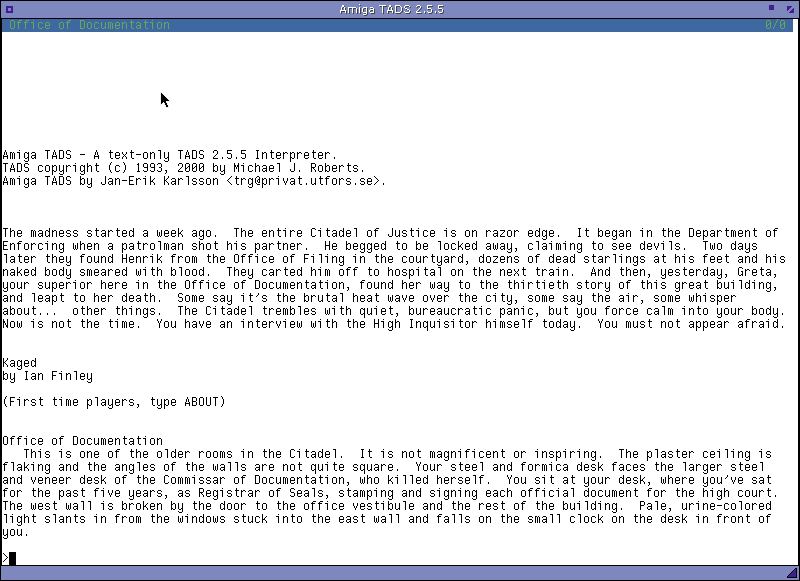
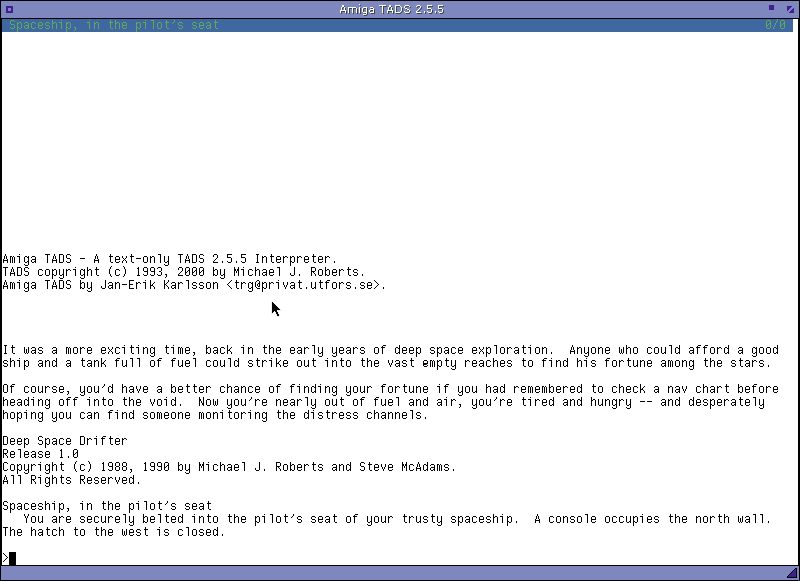
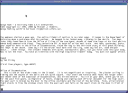 Amiga TADS, running Ian Finley's Kaged,
which took first place in the 6th Annual Interactive Fiction
Competition; and Deep Space Drifter on the Amiga.
Amiga TADS, running Ian Finley's Kaged,
which took first place in the 6th Annual Interactive Fiction
Competition; and Deep Space Drifter on the Amiga.
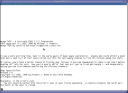 Kaged uses graphics and music on HTML-enabled version
of TADS, but (like almost all TADS games that use multimedia
effects) is still fully playable on a text-only interpreter
like Amiga TADS. Thanks to Ally for the Amiga screenshots.
Kaged uses graphics and music on HTML-enabled version
of TADS, but (like almost all TADS games that use multimedia
effects) is still fully playable on a text-only interpreter
like Amiga TADS. Thanks to Ally for the Amiga screenshots.
|
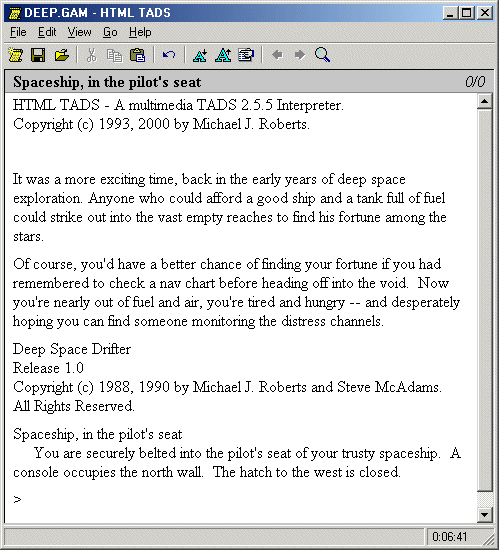
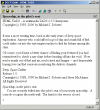 HTML TADS for Windows, running Deep Space Drifter.
The Windows HTML interpreter is capable of running any TADS game,
whether the game is a graphical game or a traditional all-text game.
Deep Space Drifter is text-only.
HTML TADS for Windows, running Deep Space Drifter.
The Windows HTML interpreter is capable of running any TADS game,
whether the game is a graphical game or a traditional all-text game.
Deep Space Drifter is text-only.
|
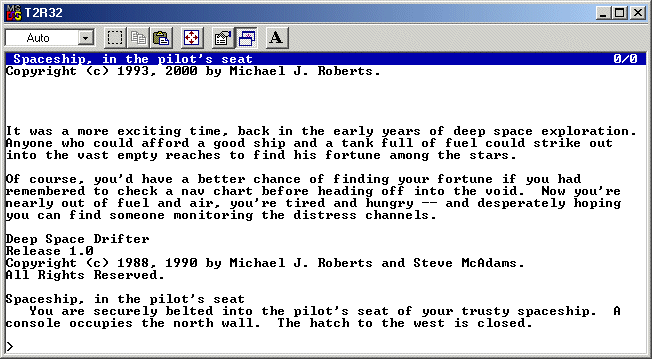
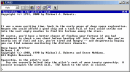 TADS for MS-DOS (in a DOS box on Windows ME), running
Deep Space Drifter. TADS lets you run the same game on any
TADS interpreter; each interpreter provides a user interface
customized to its operating system environment, so games
automatically adapt to the local look and feel. You can even
run games originally designed for HTML TADS on any interpreter;
on a text-only system like DOS, the interpreter will simply
omit the game's multimedia features.
TADS for MS-DOS (in a DOS box on Windows ME), running
Deep Space Drifter. TADS lets you run the same game on any
TADS interpreter; each interpreter provides a user interface
customized to its operating system environment, so games
automatically adapt to the local look and feel. You can even
run games originally designed for HTML TADS on any interpreter;
on a text-only system like DOS, the interpreter will simply
omit the game's multimedia features.
|
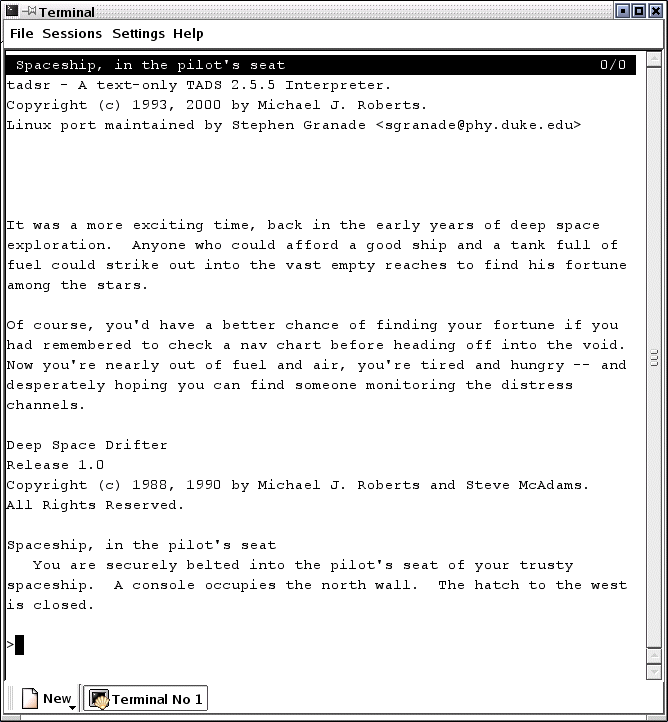
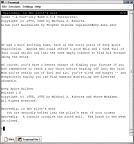 TADS for Linux (in a Linux console window), running
Deep Space Drifter.
TADS runs on many Unix and Linux systems, and the source code
is available and highly portable to new Unix variants.
Currently, the developer tools (compiler and debugger) and
text-only interpreters are available, but multimedia
(HTML TADS) versions are not yet implemented on Unix platforms.
Thanks to Michael Burschik for this screenshot.
TADS for Linux (in a Linux console window), running
Deep Space Drifter.
TADS runs on many Unix and Linux systems, and the source code
is available and highly portable to new Unix variants.
Currently, the developer tools (compiler and debugger) and
text-only interpreters are available, but multimedia
(HTML TADS) versions are not yet implemented on Unix platforms.
Thanks to Michael Burschik for this screenshot.
|
| |
 Other Platforms. TADS runs on even more platforms than the
ones listed here. If you have screen shots of TADS running on any
system we haven't already listed above, please send them to us and
we'll post them here.
Other Platforms. TADS runs on even more platforms than the
ones listed here. If you have screen shots of TADS running on any
system we haven't already listed above, please send them to us and
we'll post them here.
|